Best Home Air Conditioning Systems UK: 2026 Guide
Choosing the best home air conditioning system isn’t simply about finding the most expensive unit or the biggest brand. A good air conditioning system should be properly sized for your home, efficient to run, quiet enough for everyday use and installed correctly by qualified professionals.
The right solution also depends on what you’re trying to achieve. Cooling one bedroom is very different from controlling the temperature throughout a large family home. Some homeowners want cooling for the hottest summer days, while others want a system capable of providing efficient heating as well.
At 2 Brothers Renewables Ltd, we design and install heating, cooling and renewable-energy systems across Dorset and the South Coast. In this 2026 guide, we’ll explain the main types of home air conditioning, what to look for when comparing top rated AC units, and why professional design and installation matter just as much as the equipment itself.
What Is the Best Air Conditioning System for Your Home?
There isn’t one system that’s best for every property.
The right choice depends on:
- The number and size of rooms
- Property layout
- Insulation
- Amount of glazing
- Sun exposure
- How individual rooms are used
- Required cooling capacity
- Whether heating is also required
- Available space for indoor and outdoor equipment
- Budget
- Noise requirements
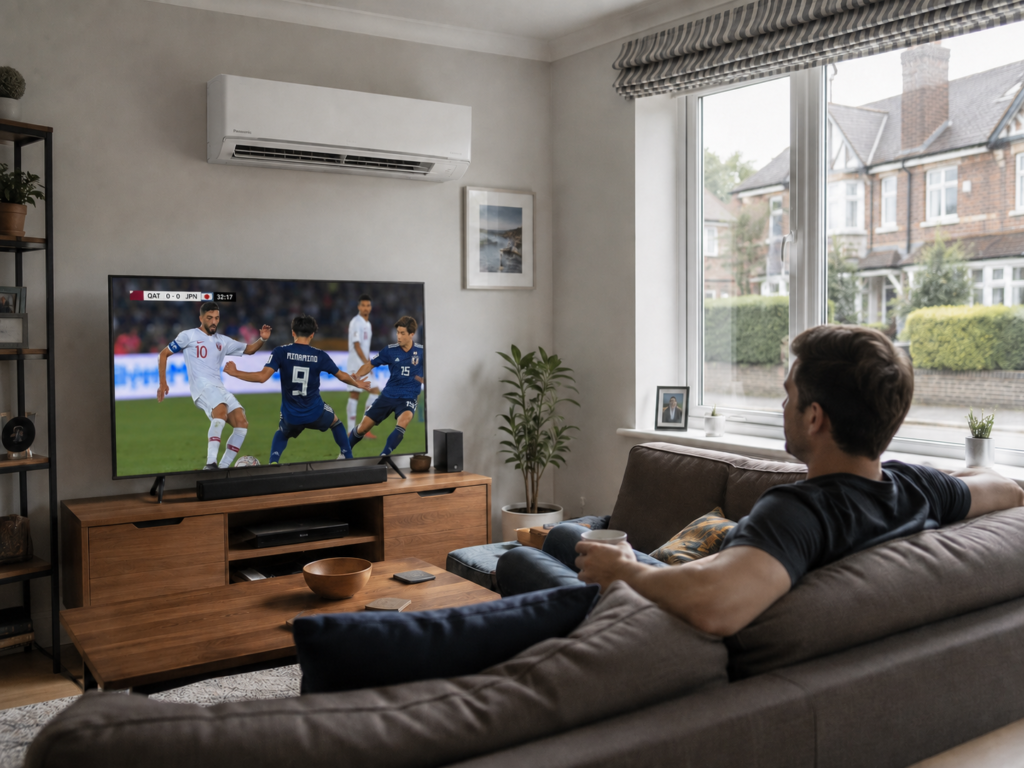
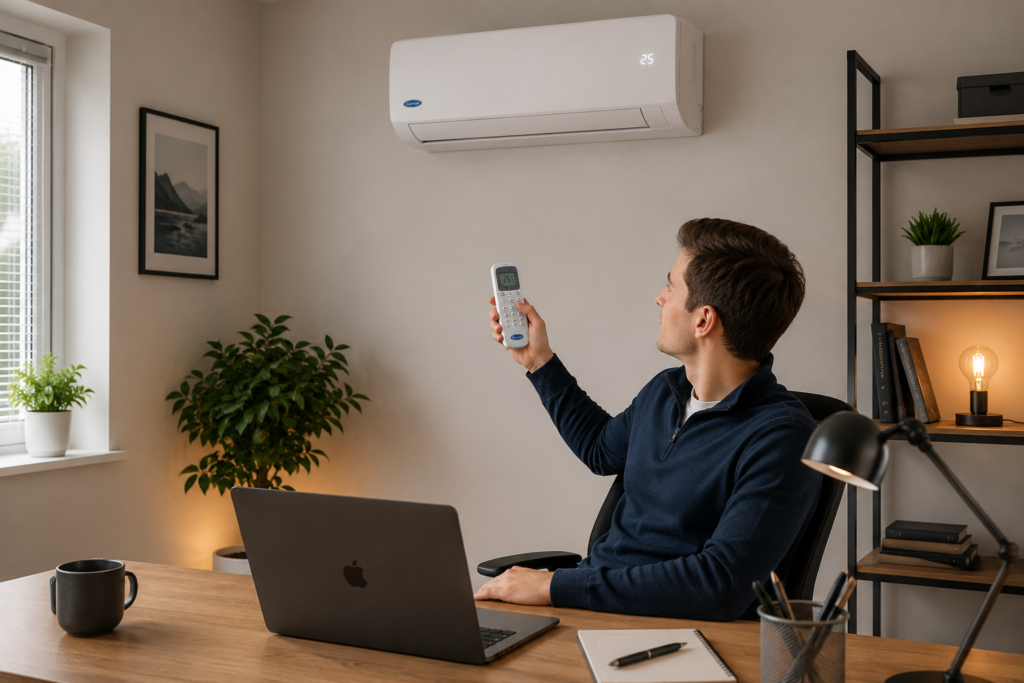
For example, a wall-mounted split system can be ideal for cooling a bedroom, home office or loft conversion.
If several rooms require independent temperature control, a multi-split system may make more sense.
For properties undergoing major renovation, a concealed ducted system could provide whole-home climate control with less visible equipment.
Before comparing the top AC units, first establish what you actually need the system to do.
The Main Types of Home Air Conditioning
Most UK homeowners will encounter three main options: single-split systems, multi-split systems and ducted air conditioning.
There are also reversible systems capable of providing both heating and cooling.
Single-Split Air Conditioning
A single-split system connects one indoor air conditioning unit to one outdoor condenser.
It’s one of the most straightforward options for individual rooms and can work particularly well in:
- Bedrooms
- Living rooms
- Home offices
- Garden rooms
- Loft conversions
- Conservatories
If only one or two areas of the house become uncomfortable during warm weather, you may not need whole-home air conditioning.
Installing systems only where they’re genuinely needed can provide effective temperature control without unnecessarily increasing the complexity or cost of the project.
Multi-Split Air Conditioning
A multi-split system allows several indoor units to connect to a single outdoor unit.
Each indoor unit can provide independent temperature control, making multi-split air conditioning particularly useful for properties where several rooms require cooling.
For example, a homeowner could have separate indoor units serving the master bedroom, children’s bedrooms and home office while limiting the number of outdoor condensers.
Installation is more involved than a basic single split, so careful planning of pipe routes, drainage and outdoor-unit positioning becomes particularly important.
Ducted Air Conditioning
For homeowners looking for a more discreet finish, ducted air conditioning can be an attractive option.
Conditioned air is distributed through concealed ductwork and enters rooms through relatively unobtrusive grilles or diffusers.
This can provide excellent whole-home temperature control without wall-mounted units in every room.
However, ductwork requires space.
Ducted systems are therefore often most practical during:
- New construction
- Major renovations
- Loft conversions
- High-end refurbishments
- Projects where ceiling voids are already available
When people search for the best home central air conditioning systems, this type of concealed solution is often what they’re considering.
Air Conditioning That Also Heats Your Home
One of the major advantages of modern air conditioning is that many systems aren’t limited to cooling.
Reversible air conditioning systems operate as air-to-air heat pumps.
During summer, heat is transferred from inside the property to the outside. When heating is required, the refrigeration cycle can be reversed so the system extracts heat from outside air and transfers it indoors.
This means the same indoor units can provide cooling during warm weather and heating during colder periods.
For some properties, particularly individual rooms, garden offices, extensions and other spaces requiring independent temperature control, this can make the system useful throughout the year rather than only during summer.
Because 2 Brothers Renewables Ltd works across heating, cooling and renewable technologies, we can consider whether cooling alone or a combined heating-and-cooling solution makes more sense for the property.
What Makes a Good Home Air Conditioning System?
Efficiency ratings matter, but they shouldn’t be considered in isolation.
The performance of an installed system depends on the relationship between the equipment and the building.
Even one of the top rated AC systems can perform poorly if it has been incorrectly sized or badly installed.
A good residential air conditioning system should provide a balance of:
Energy Efficiency
Modern inverter-controlled air conditioning systems can adjust their output according to demand rather than simply operating at full power continuously.
Correct sizing is still critical.
A system shouldn’t need to work excessively hard to maintain the required temperature, but installing a significantly larger unit than necessary isn’t automatically more efficient.
Quiet Operation
Noise is particularly important in bedrooms and home offices.
Check the manufacturer’s indoor sound ratings and discuss where the unit will be positioned.
The outdoor condenser also needs careful consideration, particularly in properties close to neighbouring homes.
Good Temperature Control
Modern systems can maintain a stable indoor temperature rather than repeatedly allowing rooms to become too warm and then rapidly cooling them.
Multi-room installations can also provide individual temperature control for different areas of the house.
Reliable Controls
Depending on the equipment selected, controls may include:
- Remote controls
- Programmable timers
- Wi-Fi connectivity
- Smartphone apps
- Individual room settings
- Heating and cooling modes
- Scheduling
Smart features can be useful, but they shouldn’t make the system unnecessarily complicated.
The best controls are the ones household members will actually use.
Why Correct Air Conditioning Sizing Matters
A common assumption is that buying a larger air conditioner provides better cooling.
It doesn’t necessarily work that way.
An oversized unit may reach the desired temperature very quickly and repeatedly cycle on and off rather than operating steadily.
An undersized system creates the opposite problem. It may operate continuously during warmer weather while struggling to maintain the desired temperature.
A professional assessment should therefore consider factors including:
- Room dimensions
- Ceiling height
- Insulation
- Window size
- Window orientation
- Solar gain
- Occupancy
- Electrical equipment
- How the room is used
The original article correctly makes sizing one of its central points: equipment selection should be based on the actual room and building characteristics rather than floor area alone.
At 2 Brothers Renewables Ltd, we assess the property before recommending equipment so that the proposed system is appropriate for the space it’s expected to heat or cool.
Which Air Conditioning Brands Are Best?
Homeowners searching for the best air conditioning systems for home use often expect there to be one manufacturer that clearly beats every alternative.
In practice, it’s more complicated.
Established manufacturers offer different product ranges aimed at different budgets and applications.
Depending on the project, UK homeowners may encounter brands such as:
- Daikin
- Mitsubishi Electric
- Panasonic
- Fujitsu
- Toshiba
- Samsung
- LG
Rather than choosing based solely on the manufacturer’s name, compare the specific model being proposed.
Consider:
- Cooling and heating capacity
- Energy efficiency
- Indoor noise levels
- Outdoor noise levels
- Manufacturer warranty
- Controls
- Wi-Fi functionality
- Filtration
- Appearance
- Availability of replacement parts
- Servicing requirements
The best HVAC systems aren’t necessarily those with the longest specification sheet. They’re systems that match the requirements of the property and can be properly installed, maintained and supported.
Why Installation Quality Matters
The equipment is only part of an air conditioning system.
Installation involves refrigerant pipework, electrical connections, condensate drainage, controls, mounting and commissioning.
Poor installation can compromise the performance of otherwise excellent equipment.
Before work begins, an installer should establish:
- Appropriate indoor unit positions
- Outdoor condenser location
- Refrigerant pipe routes
- Condensate drainage
- Electrical requirements
- Noise considerations
- Maintenance access
A neat installation also matters aesthetically.
Pipework and external equipment should be positioned thoughtfully rather than simply following whichever route is easiest for the installer.
F-Gas Certification and Air Conditioning
Air conditioning installation isn’t simply a general DIY or electrical job.
Stationary air conditioning and heat-pump equipment containing fluorinated greenhouse gases is subject to UK F-Gas requirements. Businesses carrying out installation, maintenance, servicing, repair or decommissioning of relevant equipment must hold appropriate certification, and individuals handling refrigerants require suitable qualifications. (GOV.UK)
When comparing installers, certification should therefore be one of the basic checks rather than an optional extra.
Refrigerants and Choosing a System in 2026
Refrigerant technology and regulation continue to evolve.
The UK is reducing the environmental impact associated with fluorinated greenhouse gases, which means refrigerant choice is becoming increasingly relevant when purchasing new equipment.
For a homeowner, you don’t need to become a refrigerant specialist.
You should, however, be able to ask the installer:
- Which refrigerant does the system use?
- Is it appropriate for a new 2026 installation?
- Are the engineers trained to work safely with it?
- Will parts and servicing remain readily available?
- Are there any particular installation requirements?
2 Brothers Renewables Ltd can account for current equipment and refrigerant requirements when specifying an appropriate system rather than relying on outdated product recommendations.
Smart Air Conditioning Controls
Smart controls can make modern air conditioning considerably easier to use.
For example, app connectivity may allow you to switch on bedroom cooling before going upstairs or control a home office independently from the rest of the house.
Scheduling can also prevent unnecessary operation.
You might program a bedroom system to reach a comfortable temperature shortly before bedtime rather than leaving it operating continuously.
Useful functionality can include:
- Wi-Fi control
- Smartphone applications
- Weekly schedules
- Timers
- Individual room temperatures
- Heating and cooling modes
- Energy monitoring on compatible systems
More technology isn’t automatically better.
Controls should make the system easier to operate, not more complicated.
Choosing the Best Air Conditioning Installers in Dorset
Choosing equipment is only half of the decision.
If you’re searching for the best air conditioning installers in Dorset, look at how the company approaches the project rather than comparing headline prices alone.
A professional installer should take the time to understand your property before recommending equipment.
Look for:
- A proper assessment – The installer should understand room sizes, usage, insulation and heat gain.
- Clear equipment specifications – You should know exactly which indoor and outdoor units are being proposed.
- Appropriate qualifications – Refrigerant work should be undertaken by appropriately qualified professionals.
- Thoughtful system design – Indoor units, outdoor units, pipework and drainage should all be considered before installation.
- Clear warranty information – Understand both manufacturer and installation warranties.
- Maintenance support – Ask whether the company can continue servicing the equipment after installation.
- Transparent quotations – The scope of work and any exclusions should be clear.
The original article similarly emphasises surveying, qualifications, written model specifications, drainage, noise, warranties and aftercare when comparing installers.
Choosing Air Conditioning Installers Across Wessex
The same principles apply when searching for the best air conditioning installers in Wessex.
Local experience can be useful because properties across Dorset and the wider South Coast vary considerably.
An installation could involve a modern home, older property, coastal building, loft conversion, flat, commercial premises or a property where outdoor-unit positioning requires particularly careful consideration.
The installer should adapt the design to the building rather than forcing every property into the same standard installation.
How Much Does Home Air Conditioning Cost?
The total price includes more than the air conditioning unit itself.
Depending on the project, costs can include:
- Indoor and outdoor equipment
- Installation labour
- Refrigerant pipework
- Electrical work
- Condensate drainage
- Mounting equipment
- Access equipment
- Controls
- Commissioning
- Future servicing
This is why two quotations using apparently similar equipment can have different prices.
One may include electrical work, careful pipe routing and commissioning while another excludes some of those elements.
Compare the complete scope of work rather than simply looking at the number at the bottom of the quotation.
Are Expensive Air Conditioning Systems Always Better?
No.
Premium systems can provide genuine advantages, including quieter operation, better controls, improved efficiency or additional functionality.
But paying for features you’ll never use doesn’t necessarily provide better value.
Likewise, choosing the cheapest equipment available can become expensive if reliability, efficiency, parts availability or aftercare are poor.
Good value normally comes from balancing:
equipment quality + correct sizing + professional installation + sensible controls + ongoing support.
That combination matters considerably more than choosing a system because it appears at the top of an online list of top AC units.
Home Air Conditioning from 2 Brothers Renewables Ltd
For homeowners across Poole, Bournemouth, Dorset and the wider South Coast, 2 Brothers Renewables Ltd provides professionally designed heating, cooling and renewable-energy solutions.
Rather than simply supplying an air conditioning unit, we consider how the system will work within the property.
That includes equipment selection, required capacity, indoor and outdoor positioning, controls, electrical requirements and how the system will be maintained afterwards.
Whether you’re considering air conditioning for one bedroom, several rooms or a larger whole-home installation, the first step is determining what your property actually requires.
Find the Right Air Conditioning System for Your Home
The best home air conditioning system isn’t necessarily the most expensive system or the model with the longest list of features.
It’s one that’s appropriately sized, efficient, quiet, professionally installed and suited to how you use your home.
Start with your rooms rather than a brand ranking. Decide where cooling is actually required, whether you also want heating and what level of control you need.
From there, suitable equipment can be selected and properly designed around the property.
Contact 2 Brothers Renewables Ltd to discuss home air conditioning in Dorset and find a heating and cooling solution designed around your property.