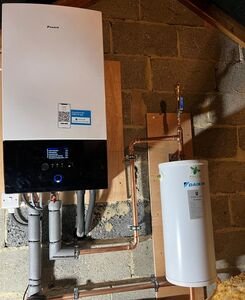

If you’re replacing your heating system, you may be wondering whether to install another gas boiler or make the move to an air source heat pump.
There isn’t one answer that’s right for every home.
A modern gas boiler is usually cheaper to install and can be a straightforward replacement if your property is already connected to the gas network. An air source heat pump costs more upfront, but it can provide highly efficient, low-carbon heating and eligible homeowners in England and Wales can currently receive a £7,500 Boiler Upgrade Scheme grant towards installation.
For many homes, the decision comes down to the property itself: insulation, radiators, available outdoor space, existing heating system and how the household uses its heating.
At 2 Brothers Renewables Ltd, we provide renewable heating solutions across Dorset and the South Coast. In this guide, we’ll compare air source heat pumps and gas boilers in straightforward terms to help you understand which could be better for your home.
What’s the Main Difference Between a Heat Pump and a Gas Boiler?
A gas boiler creates heat by burning natural gas. That heat is then used to warm the water circulating through your radiators and provide hot water.
An air source heat pump works differently.
Instead of creating most of its heat directly, it takes heat from the outside air and transfers it into your home using electricity.
It can do this even when the weather outside is cold.
This fundamental difference is why heat pumps can be so efficient. According to the Energy Saving Trust, heat pumps typically deliver around three to four units of heat for every unit of electricity used.
Air Source Heat Pump vs Gas Boiler: Quick Comparison
| Air Source Heat Pump | Gas Boiler |
|---|---|
| Higher initial installation cost | Usually lower initial cost |
| £7,500 grant potentially available | No equivalent Boiler Upgrade Scheme grant |
| Uses electricity | Uses natural gas |
| Very efficient | Less efficient than a heat pump |
| Lower-carbon heating | Burns fossil fuel in the home |
| Works particularly well at lower flow temperatures | Can operate at higher flow temperatures |
| May require radiator or heating-system changes | Often works with an existing radiator system |
| Requires an outdoor unit | Usually requires a flue |
Neither system automatically wins in every category.
The better option depends on your home, budget and long-term plans.
Which Is Cheaper to Install?
A gas boiler is usually cheaper to install upfront, particularly when replacing an existing gas boiler with another similar system.
An air source heat pump installation is more involved.
The installer needs to assess the property’s heat loss, determine the correct heat pump size and check whether the radiators and hot water system are suitable.
Some properties may need larger radiators, a different hot water cylinder or other improvements to get the best performance from the system.
This means the initial quote for a heat pump can be significantly higher than a straightforward boiler replacement.
However, comparing only the headline installation prices misses an important part of the picture: government support is available for qualifying heat pump installations.
Can You Get a £7,500 Heat Pump Grant in 2026?
Yes. The Boiler Upgrade Scheme currently provides a grant of £7,500 towards the cost of installing an air source heat pump in eligible homes and small non-domestic properties in England and Wales.
The grant is normally handled by the installer rather than the homeowner receiving £7,500 directly.
The installer applies for the grant and its value is taken off the amount you pay for the installation.
There are eligibility requirements, so not every project will automatically qualify.
You can check the current rules directly on GOV.UK’s Boiler Upgrade Scheme guidance.
For homeowners comparing a heat pump with a gas boiler, this grant can substantially reduce the difference between the two installation costs.
Which Is More Efficient: A Heat Pump or Gas Boiler?
In terms of the amount of useful heat produced from the energy consumed, an air source heat pump can be significantly more efficient than a gas boiler.
A boiler burns fuel to produce heat and inevitably loses some energy during that process.
A heat pump is different because much of the heat delivered into the property comes from the outside air rather than being generated directly from electricity.
According to the Energy Saving Trust, a typical heat pump can provide approximately three to four units of heat for every unit of electricity it consumes.
That doesn’t mean a heat pump is “300% to 400% efficient” in quite the same way we normally think about a boiler. It is moving existing heat rather than converting electricity directly into heat.
But from a homeowner’s perspective, the important point is simple: heat pumps can deliver considerably more usable heat than the electrical energy they consume.
Is a Heat Pump Cheaper to Run Than a Gas Boiler?
This is where the comparison becomes less straightforward.
A heat pump is much more efficient than a gas boiler, but electricity in the UK costs considerably more per unit than natural gas.
That means higher efficiency does not automatically guarantee a dramatically lower heating bill.
The actual running cost depends on:
- The efficiency of the heat pump
- Your electricity tariff
- The efficiency of the gas boiler you’re comparing it with
- How much heat your home requires
- Your heating temperature
- Insulation and heat loss
- How the heating system has been designed
A well-designed heat pump operating efficiently in a suitable property can be competitive with gas heating.
A poorly designed system running at unnecessarily high temperatures may cost considerably more to operate.
This is why installation quality and system design are so important when considering a heat pump.
Will a Heat Pump Keep Your House Warm?
Yes, provided the system has been correctly designed for the property.
One common misconception is that heat pumps only work in mild weather.
Air source heat pumps are designed to extract heat from outside air even when outdoor temperatures fall below freezing.
The way they heat a home can feel different from a traditional gas boiler, however.
A gas boiler often sends relatively hot water through the radiators for shorter periods.
A heat pump normally works most efficiently using lower water temperatures over longer periods.
Rather than repeatedly allowing the property to become cold and then rapidly heating it again, a heat pump can maintain a more consistent indoor temperature.
For homeowners accustomed to switching a boiler on for a short blast of heat, this can require a small change in how the heating system is used.
Do You Need New Radiators for a Heat Pump?
Not necessarily.
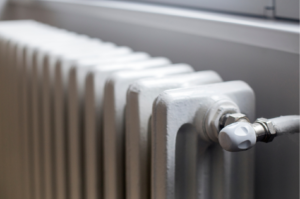
Some homes can use their existing radiators with an air source heat pump, while others may benefit from larger radiators or other changes.
Heat pumps generally operate most efficiently at lower water temperatures than traditional gas boilers.
At a lower water temperature, a radiator produces less heat. If an existing radiator isn’t large enough to heat the room properly at that temperature, it may need to be replaced with a larger model.
This doesn’t automatically mean replacing every radiator in the house.
A proper heat-loss assessment can determine how much heat each room requires and whether the existing radiators can provide it.
We’ll cover this subject in more detail in our guide to whether you need new radiators for a heat pump.
Do You Need Underfloor Heating for a Heat Pump?
No. You do not need underfloor heating to install an air source heat pump.
Heat pumps can work with radiators, underfloor heating or a combination of the two.
Underfloor heating can work particularly well because its large surface area allows it to provide comfortable heating at relatively low water temperatures.
However, correctly sized radiators can also work effectively with a heat pump.
The right solution depends on the property rather than there being one heating system that every heat pump requires.
Does Your Home Need to Be Perfectly Insulated?
No, but insulation matters.
A heat pump can be installed in many different types and ages of property, including older homes.
What matters is understanding how quickly the building loses heat.
A poorly insulated property requires more energy to maintain a comfortable temperature regardless of whether it is heated by a boiler or heat pump.
Improving insulation can therefore reduce the amount of heating required and may allow a smaller heating system to be installed.
Before recommending a heat pump, the property should be assessed so that the system is designed around its actual heat requirements.
Which System Is Better for an Older House?
There isn’t a rule that says older houses need gas boilers and newer houses need heat pumps.
An older property can be suitable for a heat pump, but it may require more careful assessment.
Things to consider include:
- Wall, floor and loft insulation
- Windows and doors
- Existing radiators
- Available space for a hot water cylinder
- Outdoor space for the heat pump
- The property’s overall heat loss
In some older homes, improving insulation or changing several radiators can make a significant difference to heat pump performance.
The age of the house itself isn’t enough to determine whether a heat pump is suitable.
Which Is Better for Hot Water?
A combi gas boiler can provide hot water without needing a separate hot water storage cylinder, which is convenient in properties where space is limited.
Most air-to-water heat pump installations use a hot water cylinder to store domestic hot water.
This means homeowners moving from a combi boiler to a heat pump may need to find suitable space for a cylinder.
For some properties this is straightforward. For smaller homes, available space can become an important part of the decision.
A survey should identify this before the system is specified.
Which Is Better for the Environment?
An air source heat pump generally has a clear advantage when it comes to reducing carbon emissions from home heating.
A gas boiler burns natural gas inside the property and produces carbon dioxide whenever it operates.
A heat pump doesn’t burn fuel in the home. It uses electricity to transfer heat from outside into the property.
The UK electricity grid increasingly uses renewable and low-carbon electricity, meaning the carbon impact of electric heating can continue to reduce as electricity generation becomes cleaner.
This is one of the reasons heat pumps are a major part of the UK’s plans to reduce emissions from buildings.
How Long Does a Heat Pump Last Compared with a Boiler?
Both systems can provide many years of service when installed correctly and properly maintained.
The actual lifespan depends on the equipment, installation quality, usage and maintenance rather than simply whether the system is a heat pump or boiler.
A heat pump is a long-term investment, so equipment quality, system design, warranty support and access to servicing should all be considered alongside the initial installation price.
Does a Heat Pump Need More Space?
Usually, yes.
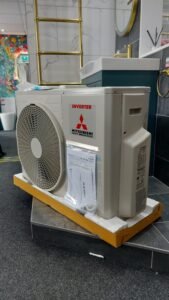
An air source heat pump requires an outdoor unit with sufficient airflow around it.
An air-to-water system will also commonly require a hot water cylinder inside the property.
A gas boiler is generally more compact, particularly if you’re using a combi boiler.
For smaller properties, the available indoor and outdoor space therefore needs to be considered before deciding to switch.
Is a Heat Pump Noisy?
Air source heat pumps contain a fan and compressor, so the outdoor unit does produce sound while operating.
Modern residential systems are designed with noise reduction in mind, but positioning still matters.
The outdoor unit should be installed with consideration for neighbouring properties, bedroom windows, walls that could reflect sound and access for future maintenance.
Noise requirements also form part of the planning standards that qualifying domestic heat pump installations need to meet.
Heat Pump vs Gas Boiler: Which Is Better for Your Home?
A gas boiler may make more sense if your main priority is the lowest possible upfront replacement cost, you already have a gas connection and your existing heating system is well suited to another boiler.
An air source heat pump may make more sense if you’re looking for a highly efficient, lower-carbon heating system and are prepared to consider the property as a complete heating system rather than simply replacing one appliance with another.
The current £7,500 Boiler Upgrade Scheme grant can also make the initial investment significantly more accessible for eligible homeowners.
For many properties, the most important question isn’t:
“Are heat pumps better than boilers?”
It’s:
“Is a heat pump a good fit for my particular home?”
Air Source Heat Pumps in Dorset
Homes across Dorset vary enormously, from modern developments and flats to cottages, older detached properties and larger rural homes.
That means the same heating system won’t necessarily be right for every property.
Before installing an air source heat pump, factors such as heat loss, insulation, existing radiators, hot water requirements and outdoor-unit positioning should all be considered.
This assessment is particularly important when replacing an existing gas boiler because a heat pump should be designed around how the entire home needs to be heated.
Air Source Heat Pumps from 2 Brothers Renewables Ltd
At 2 Brothers Renewables Ltd, we provide renewable heating solutions for homes and businesses across Dorset and the South Coast.
When considering an air source heat pump, we look at the property as a complete heating system rather than simply choosing a heat pump based on the size of the house.
That includes heat loss, radiator requirements, hot water demand, outdoor-unit positioning and how the household actually uses its heating.
If you’re currently using a gas boiler and are considering switching to a heat pump, we can help assess whether an air source heat pump is suitable for your property and what changes may be required.
So, Is an Air Source Heat Pump Better Than a Gas Boiler?
For the right property, an air source heat pump can be an excellent alternative to a gas boiler.
It offers high efficiency, lower-carbon heating and access to significant government support through the Boiler Upgrade Scheme.
However, that doesn’t mean every homeowner should immediately replace a working gas boiler with a heat pump.
A gas boiler is still generally cheaper to install initially and may be simpler where the property already has a suitable gas heating system.
The best choice depends on your home, existing heating system, budget and long-term plans.
If you’re considering replacing your boiler, contact 2 Brothers Renewables Ltd to discuss whether an air source heat pump could be a suitable option for your property.